
How One Canadian Penny Can Rewrite Your Coin Collection
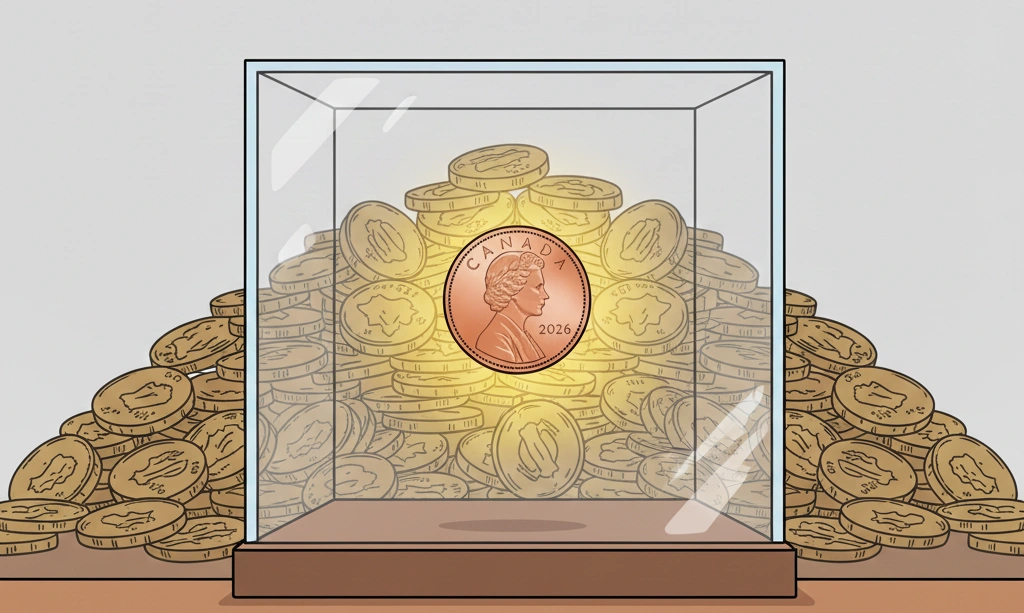
The history of Canadian one-cent coin minting, officially concluding in 2012, includes several specific issues possessing extremely high market Canadian Penny value.
The total value of a collection is reassessed upon discovering specimens featuring confirmed production anomalies or critically low mintage figures.

Numismatic indicators for these objects are based on strict physical parameters and confirmed trading results from leading auction houses.
During production, coin parameters changed depending on economic conditions and metal availability.
Issue Period | Composition | Weight | Diameter |
1858 – 1920 (Large) | 95% copper, 4% tin, 1% zinc | 5.67 | 25.4 |
1920 – 1977 (Small) | 98% copper, 0.5% tin, 1.5% zinc | 3.24 | 19.05 |
1982 – 1996 | 98% copper, 1.75% tin, 0.25% zinc | 2.50 | 19.05 |
2000 – 2012 | Copper-plated steel | 2.25 | 19.05 |
Deviations from these standards, recorded during weighing, often indicate the use of non-standard planchets.
Rarest Specimen: 1936 Dot Cent
The 1936 coin featuring a dot below the date is recognized as the most valuable object in Canadian numismatics.
This issue was produced in 1937 using dies from the previous year due to delays in preparing the portrait of George VI.
Technical features of the specimen:
Presence of a raised dot with a diameter of less than 0.5 mm below the date digits.
Known number of confirmed specimens: 3 units.
An auction record for this coin was established in 2010, totaling 402,500 US dollars.
In 2019, the price for a similar specimen in SP65 condition was fixed at 312,000 dollars.
Statistics show a price decrease of 22% over a nine-year period due to the extremely narrow circle of potential buyers capable of operating with sums of this magnitude.
Key Dates of the 1920s
The period following World War I is characterized by low mintages and a high degree of wear on coins remaining in active circulation.
Issue Year | Mintage (units) | MS63 Price (CAD) | Annual Growth (%) |
1922 | 1,243,635 | $1,200 - $1,800 | 4.5% |
1923 | 1,019,002 | $1,800 - $2,500 | 5.2% |
1925 | 1,000,622 | $1,500 - $2,200 | 4.1% |
1923 coins in MS65 Red condition (fully retaining original luster) are valued at more than 10,000 dollars.
Investment analysis reveals stable value growth for these positions, averaging 4.8% annually over the last twenty years.
Minting Errors and Their Identification
Production defects occurring at different stages of mint work significantly increase the value of common dates and can be checked with the free coin identifier.
Die Rotations
Violation of die fixation leads to a rotation of the reverse image relative to the obverse.
A 90-degree deviation raises the coin price by 50–100 dollars.
A 180-degree deviation (medal or coin alignment) is encountered extremely rarely, valued at 300–800 dollars.
Off-center Strikes
Displacement of the planchet during the die strike causes loss of part of the legend.
10% displacement: $15 - $30.
50% displacement with a full date: $150 - $400.
Wrong Planchet Errors
Using planchets from other denominations leads to changes in weight and diameter.
Cent specimens struck on 10-cent (dime) planchets are known.
These objects feature a silvery color and a weight of 1.75 – 2.09 grams, reaching prices of 1,500 dollars at auction.
Folded vs No Shoulder Fold
At the beginning of Elizabeth II's reign, the obverse design underwent changes due to technical difficulties during minting.
Two main types of imagery exist:
No Shoulder Fold (NSF): Characterized by deep relief leading to rapid die wear.
Shoulder Fold (SF): A modified design featuring flatter relief.
The 1955 No Shoulder Fold variant is particularly valuable.
Its value in MS63 condition is approximately 350 dollars, while the common variant is worth less than 1 dollar.
The percentage ratio of varieties in the 1955 mintage is approximately 1 to 5,000 in favor of the rare variant.
Price Dynamics for High-Grade Coins
The application of the Sheldon scale allows for differentiating value depending on microscopic surface defects.
Analysis of coin sales in MS66-MS67 condition demonstrates the following indicators:
1949 (A point to Denticle): $800 - $1,200.
1965 (Large Beads): $1,500 - $2,500.
Price volatility in this segment is 8–10% annually, depending on the appearance of new certified specimens in the PCGS and ICCS registries.
Rare Specimens in Unsearched Lots
In view of the official termination of penny circulation in Canada in 2012, private individuals own the bulk of the coins.
The statistical probability of finding rare 1920s dates in accumulations is less than 0.005%.
However, the probability of finding mint errors, such as "Clashed Dies" (an imprint of the opposite die) or small displacements, is higher, totaling approximately 0.02% for mintages from 1960–1980.
Professional Asset Evaluation
Determining the value of a Canadian penny requires following this technical protocol:
Metal type identification. Using a magnet allows for distinguishing steel coins (after 2000) from copper ones (before 1996).
Controlled weighing. Applying electronic scales with 0.01 g precision is necessary for detecting planchet errors.
Optical verification. Inspecting the area below the date (to find the 1936 Dot) or the monarch's shoulder (to identify NSF/SF) using a coin appraisal app, or a 20x magnification.
Color assessment. Categorizing into Red (RD), Red-Brown (RB), and Brown (BN) determines up to 70% of the final coin value in MS condition.
Influence of Certification on Liquidity
Rare Canadian coins lacking ICCS (International Coin Certification Service) or PCGS certification trade at a discount of 30–50%.
Certification confirms the absence of restoration or chemical cleaning, serving as the only guarantee of authenticity for expensive positions.
The number of certified coins in higher grades increases by 1.5% annually, gradually smoothing the deficit in the market for mid-range collectible materials.
Discovery of a single rare coin possessing confirmed technical deviations leads to a substantial increase in the capitalization of a numismatic portfolio.
The most stable assets are the 1920s issues and certified mint errors of the highest grades.
The Canadian penny market demonstrates resilience to general economic fluctuations, showing an average yield of 5.5% per annum for coins valued above 500 dollars.
Technical literacy during the inspection of circulation coins remains the primary tool for identifying hidden value in the segment of Canadian copper one-cent denominations.
Further study of die pairs and cataloging of micro-varieties continues to expand the list of potentially valuable minting objects.